Showing posts with label Movie review. Show all posts

Friday, August 9, 2024

Black (2005) | Movie Review


Black (2005) | Movie Review


 Hello Everyone 🤠,


This blog post is based on the screening of the 2005 movie "Black," directed by Sanjay Leela Bhansali. The screening was organized by the Department of English at MKBU as part of a series focused on disability-themed films. The idea for this series was inspired by R.K. Narayan's famous pre-independence short story, "Crime and Punishment." In this review, I will share my thoughts on the movie "Black."


About Disability Studies: 


Disability Studies is an interdisciplinary field that examines the social, cultural, and political dimensions of disability, challenging traditional views that treat it solely as a medical issue. It emphasizes the social model of disability, which distinguishes between an individual's impairment and the societal barriers that disable them. The field also explores the intersectionality of disability with other identities, the representation of disabled people in media and culture, and advocates for the rights and inclusion of people with disabilities. Ultimately, Disability Studies seeks to promote a more inclusive and just society by challenging ableism and valuing diversity.


About the Movie "Black":

Title: "Black"

Release Year: 2005

Director: Sanjay Leela Bhansali


In 2003, Sanjay Leela Bhansali announced the production of his new project,   "Black", which was later released in 2005.


It's Idea first came up when he met several physically disabled children while shooting Khamoshi: The Musical in the 1990s. The story was inspired by the activist Helen Keller's life and her 1903 autobiography, The Story of My Life.


For further read this source material: Click here


Story Overview and Key Characters:


The movie "Black" (2005), directed by Sanjay Leela Bhansali, tells the story of Michelle, a young girl who is both blind and deaf. Living in darkness and isolation, Michelle finds it hard to communicate and understand her surroundings, despite her parents' love.


The key figure in her life is Dr. Debraj Sahai, played by Amitabh Bachchan. He is a strict but caring teacher who also struggles with alcoholism and Alzheimer's disease. When he starts teaching Michelle, his methods are tough, and her father initially resists his approach. However, Dr. Sahai's dedication helps Michelle make significant progress.


A major breakthrough comes when Michelle learns her first word, "W-A-T-E-R," which helps her begin to connect with the world around her. With Dr. Sahai’s guidance, Michelle continues to grow and eventually graduates with a B.A. honors degree. The movie’s title, "Black", symbolizes the darkness in Michelle's life that Dr. Sahai helps to illuminate, bringing hope and new opportunities into her world.


Why is "Black" Important for the Classroom?

Watching Black in a classroom setting is significant for several reasons. The film provides a sensitive and realistic portrayal of disability, illustrating the challenges and triumphs faced by those with impairments. By following Michelle’s journey, students are encouraged to develop empathy and understand different perspectives.


One key lesson from the film is the importance of perseverance. Michelle’s progress from isolation and frustration to independence and academic success highlights the power of resilience. This lesson is especially relevant for students who may face their own personal and academic challenges.


Amitabh Bachchan’s role as Debraj Sahai exemplifies the impact of a dedicated teacher. His innovative methods and relentless commitment underscore the critical role educators play in unlocking their students' potential. The film serves as an inspiration for teachers to approach their roles with greater patience, empathy, and creativity.


Additionally, Black explores the importance of communication in human relationships. It shows how Michelle learns to express herself through sign language and Braille, transforming her initially silent and dark world into one of connection and understanding. This aspect of the film highlights the value of effective communication in overcoming obstacles and finding solutions to life's challenges.


Child Psychology in Black:


In Black, we can observe how child psychology plays a significant role in the character's development. The film highlights Michelle's innocent and curious nature, showing how her psychological growth is deeply influenced by her environment and experiences.


Michelle's interactions with her teacher, Debraj Sahai, are crucial in shaping her understanding of the world and her ability to communicate. The film demonstrates how sensitive and effective teaching methods can address the psychological needs of children with disabilities, leading to significant personal growth.


So we can say that,, Black illustrates how understanding and supporting a child's psychological development can create meaningful changes and new experiences. It emphasizes the importance of nurturing environments and compassionate guidance in fostering a child's emotional and cognitive development.


Visual Style and Cinematography in Black:


Sanjay Leela Bhansali, known for his grand and dramatic films, takes a more understated yet deeply moving approach in Black. The film’s use of muted black and white colors mirrors the protagonist's inner world. Sunlight and shadows are cleverly employed to symbolize Michelle’s gradual journey from darkness to enlightenment. This visual style helps us connect with the characters and their experiences on a personal level, creating a realistic and immersive atmosphere. Ravi K. Chandran’s cinematography captures the subtle emotions of the characters and the stark contrasts in their world. The visual elements are crucial to the storytelling, allowing the audience to feel Michelle’s transition from darkness to light.


Teaching Methods:


In “Black”, teaching methods are crucial to the story. The film features Debraj Sahai, a dedicated teacher who uses unique and creative techniques to help Michelle, a young girl with visual and hearing impairments. Initially, Michelle resists these methods, but Debraj’s persistence and inventive strategies gradually help her make progress.


Debraj uses hands-on, sensory experiences to engage Michelle, tailoring his approach to her specific needs. He incorporates everyday activities, emotional connections, and Michelle’s interests into his teaching, making learning more relevant and effective. This personalized approach helps Michelle connect with her surroundings and build confidence.


The film highlights the importance of the teacher-student relationship. Debraj’s patience, empathy, and strong belief in Michelle’s potential are essential to her development. Their deep bond shows how a teacher’s dedication and understanding can significantly impact a student’s growth.


“Black” also illustrates the broader impact of effective teaching. It demonstrates that innovative methods and genuine care can help students overcome challenges and achieve their best. The film emphasizes that teaching goes beyond delivering lessons; it’s about inspiring and guiding students through their difficulties and helping them realize their potential.


Personal Reflection:


After watching Black, I found it profoundly moving and inspiring. The film portrays the remarkable journey of Michelle McNally, a young woman who is both deaf and blind, and her path to independence with the guidance of her devoted teacher, Debraj Sahai. The story not only captivates with its emotional depth but also provides valuable insights into the challenges faced by individuals with disabilities.


The film’s use of light and shadow is particularly striking and adds a profound layer to its storytelling. These visual elements effectively illustrate Michelle’s journey from darkness to light, both literally and metaphorically. The way sunlight and shadows are utilized to represent Michelle’s slow but significant progress reflects her internal transformation. This artistic choice enhances the film’s exploration of child psychology and the impact of teaching methods, creating a more immersive and engaging experience.


Black stands out for its portrayal of the human spirit's resilience. It emphasizes how, despite severe challenges, perseverance and determination can lead to remarkable achievements. Michelle’s journey is a testament to the strength and courage required to overcome substantial obstacles. Her story is not just about personal triumph but also highlights the broader impact of education and the role it plays in changing lives. The film serves as a powerful reminder of how education can transform one's life, offering hope and new opportunities even in the face of daunting difficulties.

The performances by Rani Mukerji and Amitabh Bachchan are exceptional and add significant depth to the film. Rani Mukerji’s portrayal of Michelle captures the emotional and physical struggles of her character with great sensitivity and authenticity. Amitabh Bachchan’s role as Debraj Sahai is equally compelling; his performance embodies the dedication, creativity, and compassion required to make a difference in a student’s life. Both actors bring their characters to life in a way that deeply resonates with the audience, making their experiences and growth feel real and impactful.


So we can say that,, Black is a powerful film that not only tells a compelling story but also delivers important lessons in understanding, patience, and innovative teaching. It highlights the significance of empathetic and creative approaches in overcoming life’s challenges. The film’s exploration of perseverance and empathy, combined with its strong performances and thoughtful cinematography, makes it a memorable and inspiring piece of cinema. It serves as a poignant reminder of the value of dedicated teaching and the transformative power of education in helping individuals reach their full potential.


Conclusion:


   In nutshell, we can say that, Black teaches us to persevere, believe in ourselves, and trust our efforts. Directed by Sanjay Leela Bhansali, the film profoundly highlights the strength of the human spirit and the crucial role of mentorship in realizing our potential. As a cinematic masterpiece, Black transcends traditional storytelling by delivering a powerful message about resilience and the transformative impact of education and guidance. It inspires viewers to embrace these values and apply them in their own lives, showcasing the incredible journey of overcoming obstacles through determination and support.


References :-


Fitria, Tira  Nur. (PDF) Analysis of Human Struggle of Main Characters in Indian Drama Film “Black” (2005), June 2022. https://www.researchgate.net/publication/361766375_Analysis_of_Human_Struggle_of_Main_Characters_in_Indian_Drama_Film_Black_2005. Accessed 9 August 2024.


Qureshi, Kira Subhani. “Beyond Mirrored Worlds: Teaching World Literature to Challenge Students’ Perception of ‘Other.’” The English Journal, vol. 96, no. 2, 2006, pp. 34–40. JSTOR, https://doi.org/10.2307/30047125. Accessed 9 August 2024.


Words Count : 1606

Images: 

Wednesday, January 17, 2024

12th Fail movie review #Restart

Hello Everyone 😊,

 This blog is part of Sunday Reading task assigned by Dilip Barad Sir.

In this blog, I would like to share my review of the inspirational movie "12th Fail" while also offering a comparative analysis.


In today's Bollywood everyone is mesmerized by action and romance movies and there are very few movies that actually convey an education and career oriented message." 12th failed movie is one of them.

  As we know UPSC is India's toughest exam.The UPSC (Union Public Service Commission) is a constitutional body in India responsible for conducting civil services examinations and recruiting candidates for various central government positions. The UPSC conducts exams such as the Civil Services Examination, Engineering Services Examination, and others to select candidates for key administrative positions in the government. Many Aspirants try their luck for this examination. 12th Fail Movie also talks about struggle of one poor- middle class UPSC aspirant Manoj Sharma who became IPS by his own hard work.


Aout Movie:

Release date: 27 October 2023 (India)
Director: Vidhu Vinod Chopra
Written by : Vidhu Vinod Chopra
Cast: • Vikrant Massey, 
          • Medha Shankar,
          • Anant V Joshi,
          •Priyanshu Chatterjee.

Based on: 12th Fail book by Anurag Pathak
Which is based on real life of IPS officer Manoj Sharma 
Production company : Vinod Chopra Films


  ( Check out Official trailer of 12th Fail)


Plot of the movie:

  Manoj Kumar Sharma, born in Chambal, faces challenges as his father is suspended for standing against corruption. After failing Class 12 due to a crackdown on cheating by DSP Dushyant Singh, Manoj overcomes hardships, including false accusations against his brother. Inspired by DSP Dushyant intervenes, changing Manoj's perspective. Despite challenges, he pursues studies, initially aiming for a DSP position. Dreams shatter, but he discovers UPSC, moves to Delhi, and eventually becomes an IPS officer. Along the way, he overcomes personal and academic hurdles, including a tumultuous relationship. In the end, he marries Shraddha, fulfilling his aspirations, while Pritam finds his true calling as a news reporter.

Manoj's journey involves sacrifices, love, and determination, leading to success in the UPSC exams. The story highlights resilience, honesty, and the pursuit of dreams.


Film Study :

• Theoretical Framework:


In this starting frame we can find Establishing shot of Chambal, highlighting poverty and harsh realities. We can also find it is captured by a helicopter shot. This symbolic helicopter shot underscores the insignificance of cheating in Manoj's life. The film employs dim lighting, serene backgrounds, and gentle music to delicately portray characters' challenges and aspirations. Realistic sounds add authenticity, skillfully capturing Manoj Kumar Sharma's determined journey and conveying broader themes of resilience and education against social odds.


Handheld camera for a gritty and realistic feel in Chambal: 

 Handheld camera shot of Chambal gives us feeling of realistic village life.

Mirror view:

In this frame we can find while DSP Dushyant and Manoj talk with each other and camera focus on front mirror. We can take it as direct impact of someone. 

Lost hope :

In the film, the loss of Manoj's bag symbolizes more than a possession—it represents the loss of hope for his future, leaving him feeling abandoned. The scene, painted with dull colors, delicately depicts his mental turmoil as others celebrate Diwali, underscoring his sense of hopelessness and vulnerability in the big city.


In this frame we can find that how camera covers the situation. The lives of the children in between depend on the decision of the two persons We can see that this frame shows that.


In this scene, Gauri Bhaiya gracefully likens UPSC to a game of snakes and ladders. Manoj, navigating trust challenges, seeks the support of friends to restart in this intricate game. Gauri Bhaiya diplomatically describes UPSC as a journey where only a select few succeed, while others may need to restart or face setbacks.


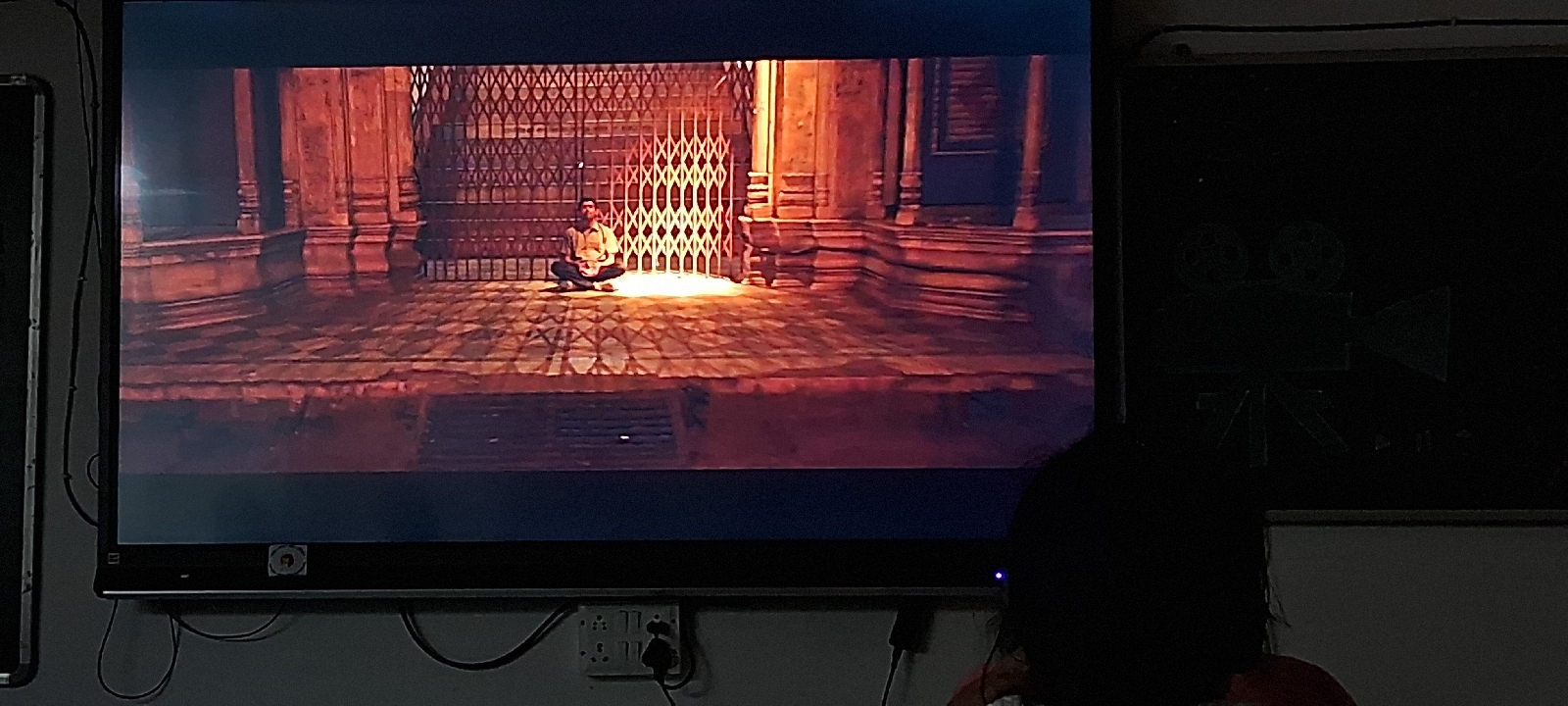
In this shot, the camera captures the scene from the gate, creating a prison-like atmosphere. On one side, aspirants linger in uncertainty about their future. Framing the scene with the gate signifies its role as an obstacle, keeping them separated from the awaited result. 


Context


12th Fail and Broader Discourses:

Education System:

Critique of rote learning and exam-focused system:

The movie questions the undue focus on rote memorization and exam success as the sole indicators of achievement. Manoj's initial resort to cheating underscores the systemic pressure to succeed, illustrating a broader critique of the prevailing emphasis on exam-oriented success.


Alternative pathways to success:

In this movie Manoj's journey highlights alternative pathways to success beyond traditional academic routes. Rather than solely relying on academic achievements, Manoj discovers the value of vocational training, emphasizing hard work and dedication. This narrative encourages a broader perspective on success, emphasizing that achievement can be found through practical skills, dedication to a craft, and commitment to personal growth. The film suggests that success is not confined to conventional academic trajectories and can be achieved through diverse and unconventional paths.


Social inequalities and access to education: 


The movie subtly addresses social inequalities in access to quality education, exemplified through the challenges faced by Manoj's family in securing educational opportunities.


Emphasis on individual potential and alternative pathways: 

The movie highlights the import
ance of individual potential and alternative paths by celebrating Manoj's persistence in chasing his dream despite setbacks. It suggests that viewers might be inspired to consider diverse career options and prioritize self-discovery over conforming to traditional academic success pressured by society.


Rush for Government job:

The film portrays the societal inclination towards glamorizing secure and prestigious government jobs, particularly the IPS in India. Manoj's aspiration is rooted in his admiration for DSP Dushyant's authority and stability.

As it portrays the fulfillment of Manoj's dream, the movie has the potential to delve into the challenges and complexities inherent in government service. This could include navigating bureaucratic hurdles and managing societal expectations, offering a more nuanced view of the realities associated with pursuing such prestigious careers.


Cultural Context:


• Fear of Failure:

People in the film look down on failing exams, showing how society doesn't like it when you don't do well in studies. Manoj's early struggles in the movie highlight how tough it can be emotionally and socially when you don't meet society's expectations.

Manoj's family is super supportive in the film, and that really helps him. The movie tells us that having family and community support is crucial, and it shows how traditional values can help you get through tough times.

Reflection of Youth Aspirations:


The movie shows that success isn't just about doing well in school. Manoj follows his dream despite facing problems and not meeting society's expectations, giving a positive and inspiring message to young people.

Keep trying and believe in yourself: Manoj's story teaches us that working hard and staying strong can help you reach your goals. This is encouraging for many young people who face difficulties and want to create their own way.

Thematic Study:

Constant learning:


Power of regular learning is the change major conflict of mindset. Regular learning is the process of success in life. Manoj Kumar Sharma is a great lerner from his own mistakes, from attempts, from life situations, from reality and also from possibilities. The power of regular learning is make a huge change in concept.


Discipline :-

The life is without discipline is nothing. Discipline is the valuable concept in life. Manoj Kumar Sharma following the discipline in his works as well as in his own life. Discipline drives you to take some valuable place. Discipline in manner, discipline in thoughts, discipline in certain redemption, etc. 

Failure and Perseverance: #Restart

 The central theme of this film revolves around overcoming failure .
 Manoj's first failure in his 12th exam was the catalyst for his transformation and subsequent pursuit of his UPSC dream.
 The film depicts failure along the way, not as the end point, but as a stepping stone to growth and self-discovery.
 This theme drives the overall arc of the story where every attempt and every setback in UPSC acts as a hurdle that tests Manoj's resolve and strengthens his resolve.
 This film challenges deep-rooted social prejudices against failure and encourages viewers to embrace it as a learning experience and source of motivation.

 We can find this type of enthusiasm in its song Restart.


Dreams and Aspirations: 

 Manoj's unwavering pursuit of becoming an IPS officer embodies the theme of pursuing dreams regardless of obstacles.
 His journey highlights the power of ambition and the sacrifices a person must make to achieve their goals.
 This theme intertwines with the theme of failure and provides Manoj with a reference point in the midst of his struggles.
 The UPSC dream gets him through difficult times and constantly reminds him of his potential.
  This film criticizes the social pressure to follow a predetermined career path.
 This work encourages viewers to recognize their own ambitions and pursue them with unwavering determination.


 Education and Social Expectations:  

This film offers a sharp critique of an educational system that emphasizes rote learning and a test-oriented culture.
 The culture of cheating in Manoj's school and the social pressure to achieve good grades reveals the flaws of the system and its inability to meet the potential of individuals.

   This topic acts as a catalyst for Manoj's initial failure and highlights the shortcomings of an education system that prioritizes grades over actual learning.
 His subsequent journey beyond the traditional academic realm highlighted the need for alternative paths to success.

  So we can say that it challenges society's obsession with academic achievement and forces viewers to question the purpose and effectiveness of the current educational system.
 We advocate a holistic approach that promotes critical thinking, skill development, and personal potential.


Family and Community Support: 

 Despite social pressures and financial hardships, Manoj has unwavering support from his family and community.
 Your emotional and practical support will prove to be very important in the journey of realizing his dreams.

 This theme serves as a source of strength and motivation for Manoj, keeping him grounded and giving him a sense of belonging throughout his difficult journey.

  This film highlights the importance of strong social networks in overcoming life's challenges and achieving personal goals.
 It emphasizes the role of family and community in providing emotional support, practical help, and encouragement.

 
 Class and Social Mobility: 

  Manoj's journey from a poor village to attaining the prestigious IPS status subtly deals with the issue of social mobility in India .
 Success for him means the opportunity to overcome social barriers and earn opportunities for promotion through hard work and determination.

 This topic adds further complexity to Manoj's struggle and highlights additional challenges faced by people from marginalized communities.
 His success provides a glimmer of hope and inspiration to others in similar situations.

 This film questions deep-rooted class hierarchies and social inequality in Indian society. Urge your audience to be aware of this.

Feminist discourse:


In the feminist discourse, Shraddha, despite her privilege, opts for bureaucracy to empower the marginalized, embodying a blend of tradition and modern ideals. Her journey, navigating trust issues and challenging traditional views on marriage, adds depth to her character.

In parallel, Manoj's mother takes on family responsibilities independently, showcasing a shift from traditional roles. This dynamic contributes to a more empowered narrative within the film.


#Restart:


Comparative Study of "Taare Zameen Par" and "12th Fail":

Similarities:

Focus on education and its shortcomings:

  Both films critique the education system's emphasis on rote learning and conformity, neglecting individual learning styles and potential. "Taare Zameen Par" specifically addresses dyslexia and the need for personalized teaching, while "12th Fail" highlights the cheating culture and societal pressure for high grades.

Challenging societal expectations:

 Both films defy societal expectations based on academic performance. "Taare Zameen Par" encourages accepting and nurturing children with learning differences, while "12th Fail" showcases alternative paths to success beyond traditional academic achievements.

Importance of family and support:

  Both films emphasize the crucial role of family in overcoming challenges and achieving goals. In "Taare Zameen Par," the supportive parents create a nurturing environment for their son, while "12th Fail" portrays the unwavering support of Manoj's family throughout his journey.

Uplifting message of hope and resilience:

 Both films offer an optimistic message of hope and resilience. "Taare Zameen Par" encourages celebrating individual talents and finding personal fulfillment, while "12th Fail" inspires audiences to overcome failures and pursue their dreams regardless of obstacles.

Differences:

Cause of failure:
 
 "Taare Zameen Par" focuses on Ishaan's dyslexia as the primary cause of his academic struggles, while "12th Fail" attributes Manoj's initial failure to the cheating culture and societal pressure to conform.

Nature of the alternative path: 

 "Taare Zameen Par" emphasizes artistic expression and individual talents as alternative paths to success, while "12th Fail" showcases the UPSC exam and government service as a way to overcome societal limitations and achieve upward mobility.


Societal commentary:

  "Taare Zameen Par" primarily critiques the education system and its lack of understanding of learning differences, while "12th Fail" delves deeper into broader societal issues like poverty, class barriers, and the pressure to conform to societal expectations.

Target audience:
 
  "Taare Zameen Par" primarily targets parents and educators, urging them to recognize and support children with learning differences, while "12th Fail" resonates with a wider audience, including young people facing societal pressures and pursuing ambitious goals.

Cultural significance:

Taare Zameen Par: Raised awareness about dyslexia and learning differences in India, prompting conversations about inclusive education and personalized learning practices.

12th Fail Resonates with the aspirations of young people in India struggling with the pressure to succeed in academic pursuits and government jobs. Offers a message of hope and self-belief for those marginalized by the education system and societal expectations.

So we can say that both "Taare Zameen Par" and "12th Fail" offer powerful critiques of education systems and societal expectations while celebrating individual potential and the importance of support. Despite their differences in focus and cultural context, their themes of inclusivity, resilience, and alternative paths to success resonate with audiences around the world.


Conclusion:
 
This type of 'Educational films' play a crucial role in learning, often carrying messages of hope, resilience, and the strength of the human spirit. They go beyond mere entertainment, challenging viewers to aspire to greatness even in the face of daunting challenges. Encouraging filmmakers to focus on such impactful narratives could lead to a transformative revolution in the film industry. Every opportunity to enjoy these enriching movies becomes a chance to be inspired, do better, and contribute to making the world a better place.

References :-

➢ Hindu, The. ‘12th Fail’ Movie Review: Vidhu Vinod Chopra Delivers yet Another Hug of Hope That Is More Earnest than Magical, 2023, https://www.thehindu.com/entertainment/movies/12th-fail-movie-review-vidhu-vinod-chopra-delivers-yet-another-hug-of-hope-that-is-more-earnest-than-magical/article67460764.ece Click here

➣ Today , India. IAS Officer’s Post on “12th Fail” Scene Draws Actor Vikrant Massey’s Reaction, www.indiatoday.in/trending-news/story/ias-officer-awanish-sharan-shares-12th-fail-scene-with-emotional-caption-vikrant-massey-reacts-2485693-2024-01-08Click here . 


Thank you for your time 😊

Assignment of Paper 209: Exploring the Divergence Between Academic and Non-Academic Writing Styles

  Assignment of Paper 209: Exploring the Divergence Between Academic and Non-Academic Writing Styles: Personal Information:- Name :- Pallavi...